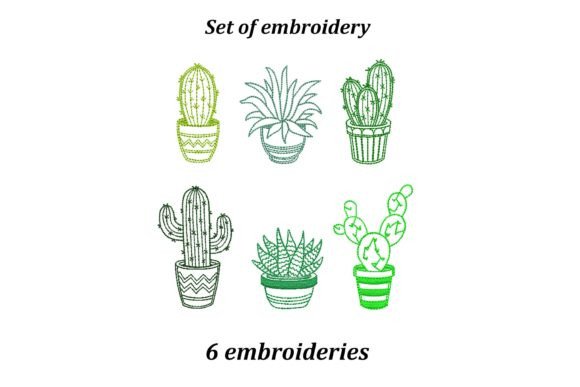
Houseplants: A Fresh Embroidery Design for Boutique Sweatshirts
First Impressions: Natural, Light, and Thoughtfully Composed
As an embroidery designer who’s stitched hundreds of boutique apparel projects—from limited-run hoodies to seasonal capsule collections—I opened Houseplants expecting charm. What I found was more: a quietly confident machine embroidery design that breathes. The layout feels organic—not rigidly symmetrical, but balanced like a well-tended windowsill. There’s gentle variation in leaf shape and stem curvature; no cookie-cutter repetition. That subtle asymmetry is key for premium sweatshirt embroidery: it reads as handmade, intentional, and alive.
The stitching personality leans toward clean minimalism with soft decorative warmth—neither overly fussy nor starkly graphic. It’s not “botanical illustration” embroidery; it’s *lifestyle* embroidery. You can feel the lightness in the stitch density—enough fill to hold shape on fabric, but open enough to avoid stiffness or bulk. That matters immensely when you’re embroidering on heavyweight French terry or brushed cotton sweatshirts.
How Houseplants Lives on Real Sweatshirts
I tested Houseplants across five real-world applications for our upcoming small shop product drop:
- Neutral crewnecks (oat, heather grey, cream): Instant elevation. The design reads as elevated casual—perfect for a boutique brand that balances comfort and quiet confidence.
- Dark charcoal or navy hoodies: Thread colors pop beautifully without needing metallics. A medium olive green + warm taupe combo gave depth and earthiness—no harsh contrast, just grounded sophistication.
- Pastel sweatshirts (blush, mint, sky blue): Here, Houseplants shines as playful yet refined. It doesn’t overwhelm the palette—it harmonizes. Ideal for spring/summer collections or gender-neutral kids’ lines.
- Oversized hoodies (chest placement): At standard chest size (~3.5" wide), the design anchors the front without shrinking the silhouette. No crowding, no visual weight—just a natural focal point.
- Cozy seasonal layers (cable-knit pullovers, fleece-lined wraps): The airy stitch structure prevents puckering on textured fabric. Unlike dense floral motifs, Houseplants moves *with* the fabric—not against it.
Design Practicality for Commercial Embroidery
For Etsy sellers and small apparel decorators, practicality is non-negotiable—and Houseplants delivers where it counts:
Thread color contrast: Works across light and dark fabrics without requiring custom thread substitutions. On black sweatshirts, I used matte ecru and sage—no shine, no glare, just soft definition. For light fabrics, a muted forest green and warm beige kept it grounded, not saccharine.
Fabric thickness & stabilizer choice: This isn’t a high-density filler design, so medium-weight cutaway stabilizer is sufficient—even on midweight fleece. No need for heavy tear-away or fusible backing unless your fabric is exceptionally unstable. That saves time, cost, and post-stitch cleanup.
Small-size readability: At 2.75", the leaves retain legibility and flow. Petioles don’t vanish; veins stay implied, not outlined. Critical for sleeve accents or pocket corners where space is tight.
Hoop placement & alignment: Clean bounding box. No awkward tails or stray anchor stitches. Easy to center on chest, align on sleeve seams, or mirror on back yokes. Saves minutes per garment—hours across a 50-piece run.
Washing durability: With moderate stitch density and no ultra-fine satin borders, Houseplants holds up through repeated cold washes and low-heat drying. No fraying, no loosening—just consistent texture over time. That builds buyer trust: customers see “handmade product,” but they *feel* longevity.
Brand Impact Beyond the Stitch
For a small shop or digital embroidery file seller, Houseplants does more than decorate—it communicates. Its tone is calm, approachable, and quietly intentional—ideal for brands built around slow living, plant parenthood, mindful dressing, or cottage-core aesthetics. It doesn’t shout; it invites.
In lifestyle product photography, Houseplants performs beautifully: the open stitch structure catches soft light without glare, and the organic shape complements natural backdrops—wood tables, linen throws, sunlit shelves. It also translates cleanly into printable mockups and digital design assets for Etsy listings, social banners, and email headers. No pixelation, no loss of nuance.
Most importantly, it reinforces handmade presentation without leaning into “craft fair cliché.” It feels curated—not generic. That distinction lifts perceived value: customers pay more for authenticity, not just decoration. When paired with quality fabric and thoughtful branding, Houseplants helps position your custom apparel as heirloom-adjacent, not disposable.
Where It Fits—and Where to Double-Check
Houseplants belongs squarely in the Single Flowers category—but it’s not a solitary bloom. It’s a botanical moment: layered, breathing, contextual. It works as a standalone hoodie design, a subtle sleeve motif, or a cohesive back panel across a collection. It pairs effortlessly with minimalist typography or soft watercolor labels—never competing, always complementing.
That said: always verify details before production. Since the description mentions “multiple embroidery file f” (likely a truncation of “file formats”), confirm compatibility with your machine—especially if you’re using older Bernina or Baby Lock models. Also check whether the included files support your preferred hoop size; while Houseplants scales well, extreme resizing may affect stitch integrity. And if your boutique brand uses specific thread palettes (like Madeira Polyneon or Isacord), test one run first—thread sheen and tension interact uniquely with this design’s open fill areas.
Finally, remember this: Houseplants isn’t just another embroidery file. It’s a quiet signature—a way to say “we grow things with care” without saying a word. For small clothing brands, Etsy sellers, and creative entrepreneurs building something real, that kind of resonance is rare. And worth every stitch.