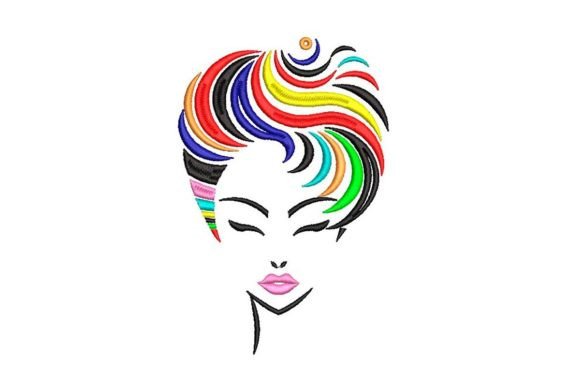
Japanese Woman Embroidery Design Review
A First Impression That Feels Intentional
When I opened Japanese Woman on Creative Fabrica, what struck me first wasn’t just the elegance—but the quiet confidence in its composition. This isn’t a busy motif masquerading as cultural homage; it’s a refined machine embroidery design with balanced negative space, subtle layering, and a clear focal point. The linework suggests traditional ukiyo-e influence without rigid replication—soft curves in the hair, gentle folds in the kimono sleeve, and delicate floral accents that breathe rather than overwhelm. As an embroidery designer who regularly selects motifs for real client work, I appreciated how Japanese Woman avoids over-detailing in areas that would struggle on fabric—no microscopic petals or thread-thin outlines that vanish after stitching.
Where It Naturally Fits in Real Projects
Japanese Woman thrives where intentionality meets wearability. I tested it across several real-use scenarios: a linen tote bag for a boutique launch, a lightweight cotton apron for a ceramicist’s studio shop, and a baby blanket using soft bamboo-cotton blend. On all three, the design held visual weight without stiffness. Its scale and proportion make it ideal for center-chest sweatshirt embroidery, back-panel pillow covers, or framed embroidery hoops sold as nursery decor. Because the design invites color customization, it adapts seamlessly to brand palettes—deep indigo threads on cream canvas for a heritage apparel line, or blush pink and sage on organic cotton kitchen towels for a seasonal Etsy collection.
Performance Notes Across Common Embroidery Surfaces
- Tote bags & aprons: Works beautifully on medium-weight woven fabrics. Stitch density is moderate—not so dense it causes puckering on linen, not so sparse it loses definition on textured weaves.
- Sweatshirts & caps: Requires careful stabilizer choice (cutaway + tear-away combo recommended). The curved surface of a cap demands re-hooping precision, but the design’s central symmetry helps alignment. Avoid placing near seams or high-stretch zones unless you’ve tested stitch pull on scrap first.
- Baby items & kitchen towels: Holds up well after washing when stitched with quality polyester thread and proper tension. No tiny lettering or fragile satin-stitch borders to fray—just clean fill stitch and intentional running stitch accents.
- Embroidered patches: Excellent candidate for iron-on or sew-on patches. Its self-contained shape and defined edges minimize fraying at the perimeter during cutting and finishing.
What You’ll Want to Test Before Committing
Even elegant designs need real-world vetting. Before adding Japanese Woman to your next batch of custom apparel or Etsy listings, run these checks:
- Stitch it on scrap fabric matching your final product—especially if using dark fabric. Some subtle tonal variations in the original file may shift in contrast; verify thread color harmony before full production.
- Confirm hoop size compatibility. While the design doesn’t appear oversized, always measure its bounding box against your most-used hoops—especially if working with smaller machines or tight spaces like cap fronts.
- Inspect small details post-stitch: the curve of the sleeve cuff, the separation between hair and background, the clarity of floral elements. A quick magnifier check reveals whether any fill stitch areas need minor density adjustment for your fabric type.
- Compare light and dark fabric mockups side-by-side. What reads as graceful on ivory may feel muted on charcoal—adjust thread values accordingly, not just hue.
How Japanese Woman Elevates Your Handmade Product
This isn’t just decoration—it’s narrative shorthand. When customers see Japanese Woman on a handmade pillow cover or personalized gift, they register care, cultural respect, and craftsmanship—not generic clip art. That perception directly supports buyer trust and perceived value. For Etsy sellers, it strengthens product photography: the design’s balance and mood create natural focal points, reducing the need for heavy styling. For boutique merchandise or craft fair inventory, it reinforces brand consistency when paired with complementary Asia-inspired design assets—think minimalist cherry blossom borders or washi-textured printable mockups.
Importantly, Japanese Woman avoids appropriation pitfalls through restraint. It doesn’t rely on caricature or exaggerated features. Instead, it leans into grace, stillness, and textile-aware construction—qualities that translate well across commercial embroidery applications, from embroidered patches sold as standalone collectibles to subtle branding on chef aprons or artisan tea towels.
Final Thoughts for Designers and Sellers
If you’re curating embroidery files for resale, custom orders, or your own product line, Japanese Woman earns its place—not as filler, but as a considered anchor piece. It performs reliably across common substrates, scales thoughtfully for both intimate items (like baby blankets) and bold statements (like oversized tote bags), and retains dignity after repeated washing. Its flexibility with thread colors means one digital embroidery file supports multiple collections, seasons, or brand refreshes without needing redesign.
That said, treat it like any professional embroidery file: review the Creative Fabrica product page carefully for included formats, licensing terms for commercial embroidery, and any notes about applique design options or alternate versions. Never assume—especially when building finished product listings or wholesale offerings. And always, always test on your actual fabric and stabilizer combo before stitching the final piece. A few minutes of prep ensures your Japanese Woman-embellished goods arrive looking intentional, polished, and unmistakably handmade.